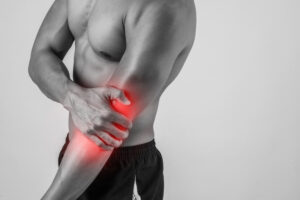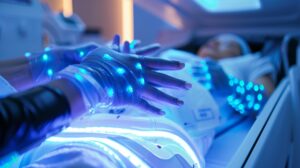
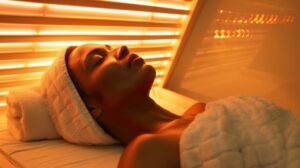
A sore joint isn’t one thing. The skin sits on top, connective fascia threads through everything below, supporting muscles wrap the structure, and deeper articular surfaces handle the load every time you move. Red light therapy interacts with these layers at different depths, depending on the wavelength used, and that depth question matters more than most marketing materials let on. Recovery Lab of La Verne serves Glendora residents by asking honest questions about what red light can and can’t do for joint discomfort.
How Light Becomes Cellular Energy
Specific wavelengths in the red and near-infrared range get absorbed by an enzyme called cytochrome c oxidase, which sits inside your cells and helps regulate energy production. When light reaches the cell at the right wavelength, the enzyme responds, and energy output rises for a window of time. That mechanism has been studied for decades across many tissue types, and the research base is genuine even when the marketing around it gets sloppy. We talk about red light this way because Glendora clients deserve a clear picture of how the modality works.
Where the Evidence Sits Today
Red light therapy has the strongest published research for skin, superficial tissue, and conditions where light reaches its target without much depth to travel. Joint research is growing, and some studies show benefits for peri-articular soft tissue, the structures wrapped around the joint rather than the cartilage at the deepest level. We won’t promise red light will fix a damaged joint, since that’s a bigger conversation involving your physician, imaging, and your full care plan. We will describe a modality that fits comfortably into a routine for people managing soft-tissue discomfort around a stiff knee, shoulder, or hip.
What the Session Itself Feels Like
Red light therapy at Recovery Lab of La Verne is one of the calmest sessions in our studio. The panels emit light without any heat sensation, no UV, and no skin reaction, since the wavelengths used are different from sunlight or tanning equipment. You sit or lie comfortably while the panels are positioned for the joint or area you’ve named at intake, and most clients close their eyes through the session. A Recovery Specialist sets up the angle and distance, since both affect how much light reaches the target tissue.
A Realistic Place to Start
If you’re exploring options for a stiff shoulder, a knee that complains after a long walk, or hip soreness that lingers past a workout, red light therapy is worth a careful look. Many Glendora clients add red light sessions to a broader recovery routine that already includes their physician’s recommendations, physical therapy, or other modalities at our studio. The modality won’t replace any part of your care plan, and it doesn’t pretend to. It gives you another input that’s gentle, repeatable, and easy to fit into a week.
A Direct Way to Find Out More
When you want to talk through whether red light therapy fits your situation, dial Recovery Lab of La Verne at (909) 477-9841. We’ll ask about the joint or area you’re working with, listen to what’s already in your routine, and help you figure out whether a session at our La Verne studio makes sense for you.